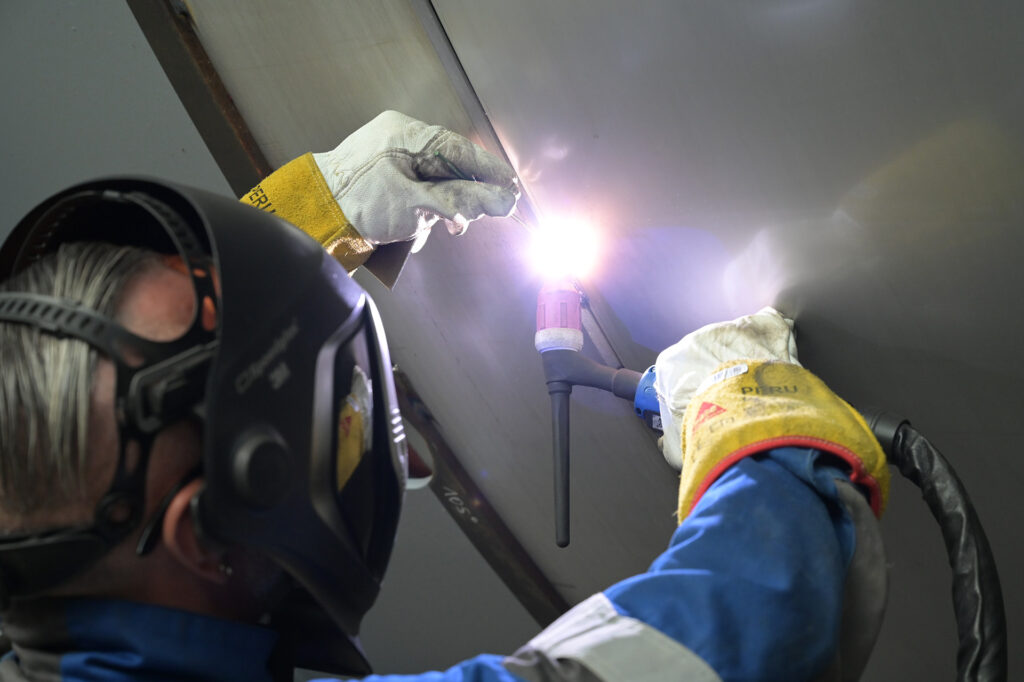
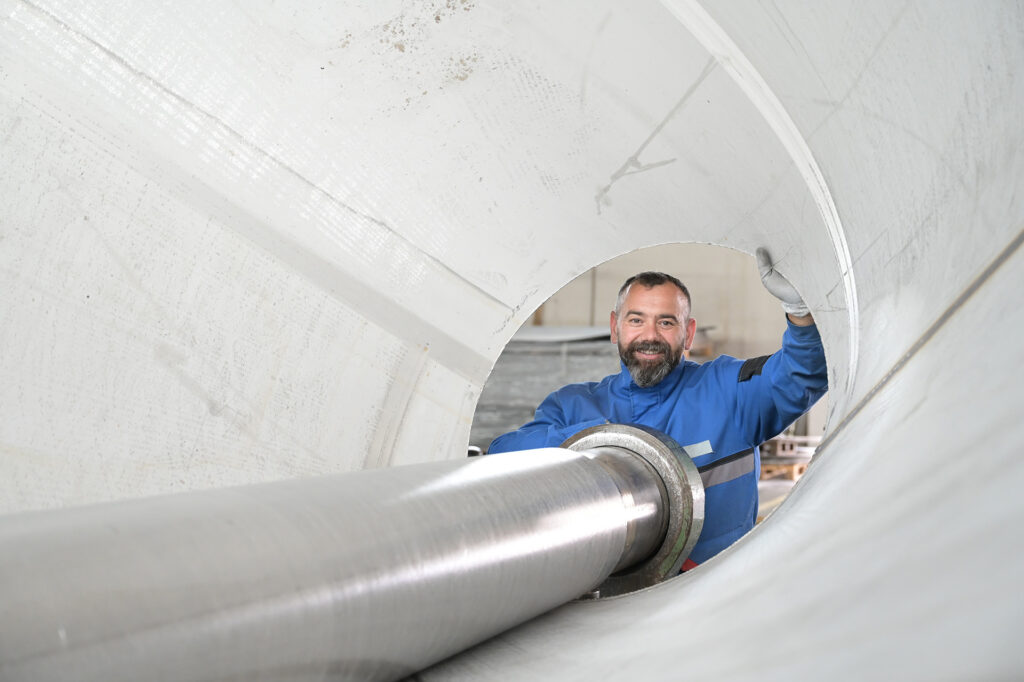
Pressure vessels are enclosed containers used to store or process media under elevated pressure or vacuum. They are designed for defined operating conditions and ensure safe operation even under high mechanical and thermal loads.
Typical design parameters:
- Operating pressure: from slight overpressure to high-pressure applications
- Configurations: cylindrical, vertical or horizontal
- Design: pressure-retaining construction with defined safety margins
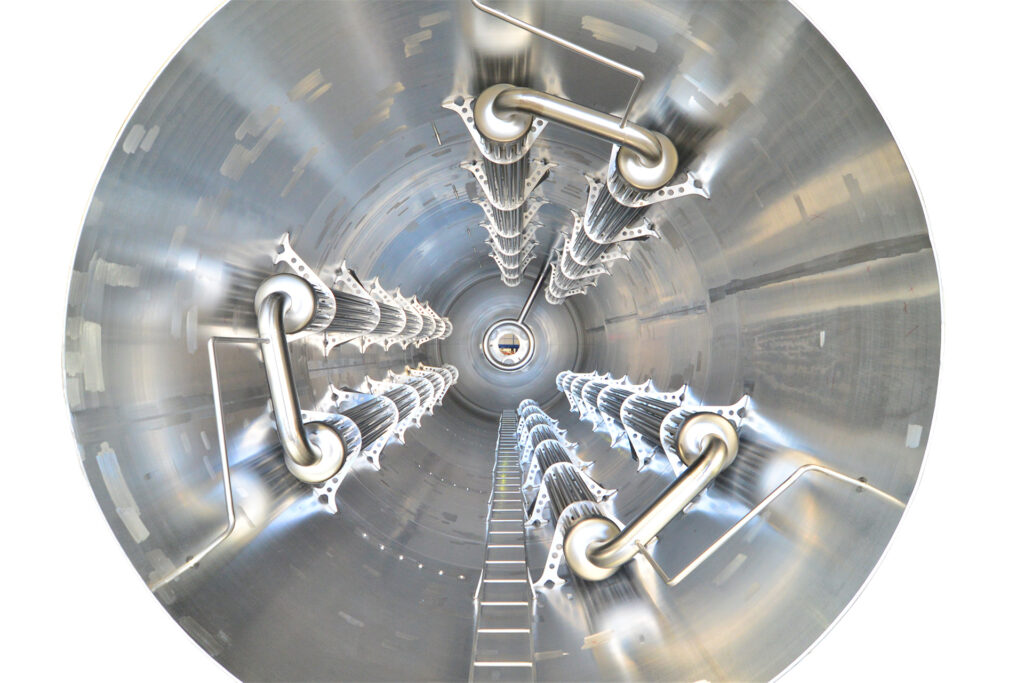
Technical Definition and Function
They are used to:
- Store gases or liquids under pressure
- Maintain stable process conditions
- Regulate pressure differentials within plant systems
Unlike storage tanks, pressure vessels are specifically designed for pressurized operating conditions. This results in higher requirements for design, materials, and testing procedures.

Typical Applications
Pressure vessels are used for:
- Gases (e.g. inert or reactive media)
- Liquids under pressure
- Media used in pressure or vacuum processes
- Safety-critical applications with defined load cases
The specific design depends on:
- Pressure level and load cycles
- Physical and chemical properties of the medium
- Temperature conditions
- Safety requirements
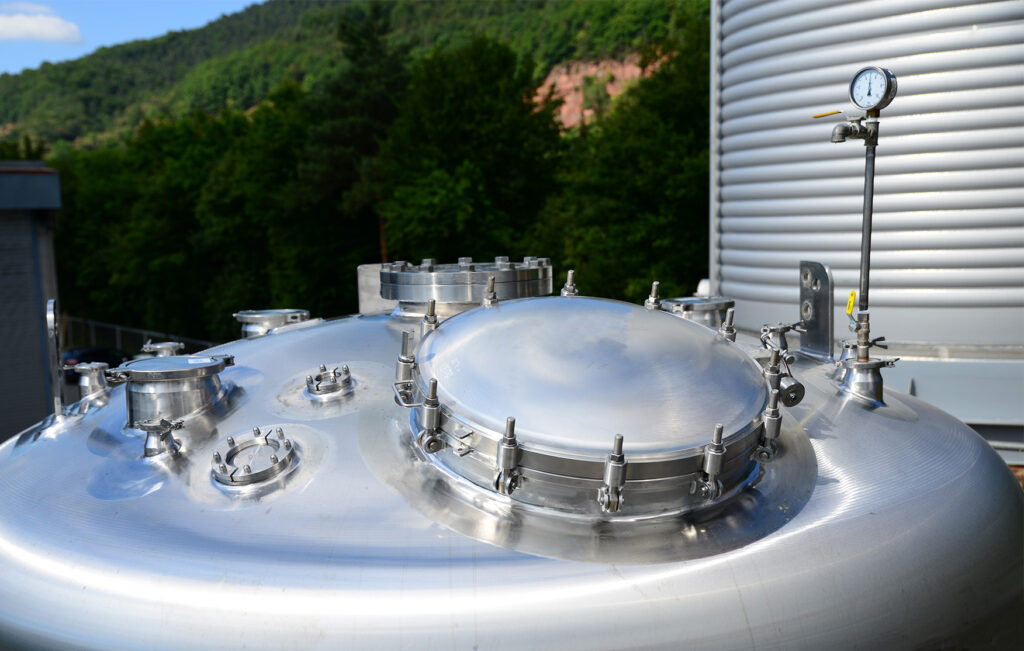
Technical Design & Options
Materials
- Stainless steel (various grades depending on media requirements)
Operating parameters
- Designed for defined pressure ranges (overpressure/vacuum)
- Consideration of static and dynamic loads
- Temperature-dependent design
- Consideration of corrosion, fatigue, and stress conditions
Equipment options
- Safety devices (e.g. pressure relief equipment)
- Instrumentation and control technology
- Heat exchangers or heating/cooling systems
- Insulation
- Inspection and maintenance openings
- Connections for integration into process systems
Codes & Standards (selection, depending on application)
- PED (Pressure Equipment Directive)
- ASME (e.g. Section VIII)
- API (depending on application)
- ATEX (for potentially explosive media)
The specific code selection is based on application requirements and the relevant regulatory environment.
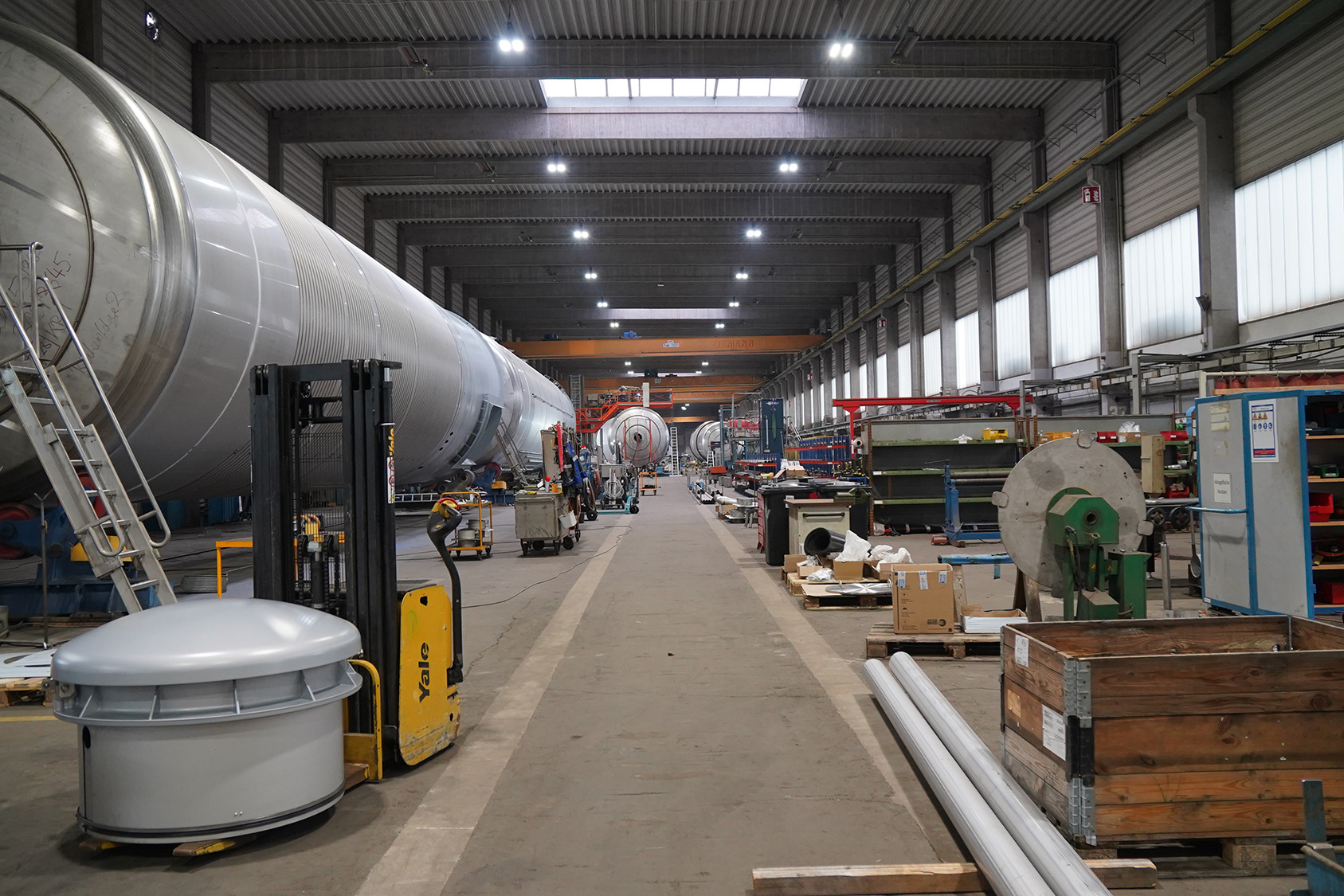
Sizes, Designs and Fabrication
Pressure vessels are individually engineered and manufactured.
Typical features:
- Single-piece fabrication possible in the workshop up to approx. Ø 7.5 m; Segmented design and on-site assembly for larger dimensions
- Engineered for high mechanical loads and pressure stress
- Documented fabrication and inspection processes
Fabrication takes place under controlled conditions with documented quality assurance.
Differentiation from Other Vessel Types
Storage tank: storage without relevant pressure
Process tank: execution of processes (mixing, reaction, etc.)
Pressure vessel: storage and processing under pressure or vacuum
Silo: storage of bulk solids
Special vessel: specific requirements beyond standardized applications
Technical Advantages and Added Value
- High process safety – engineered for defined pressure conditions and load cases
- Code-compliant design complies with relevant standards for pressure equipment
- Reliable operation under load – designed for mechanical and thermal stress
- Customized adaptation to process conditions – flexible design in terms of pressure, temperature, and medium
- Integration into complex plants – coordinated interfaces to existing systems
Applications Across Industries
Pressure vessels are used in a wide range of industries, each with specific requirements for design, codes, and operation.s.
Select your industry to learn more about the relevant requirements: