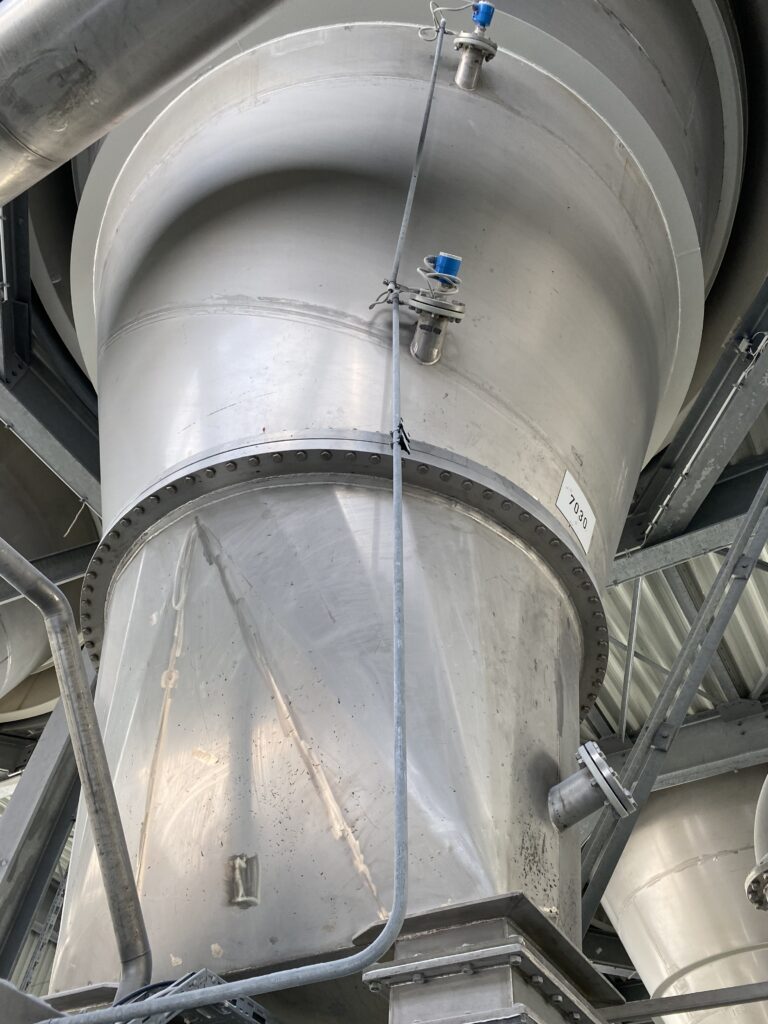
Silos are enclosed vessels designed for the storage of bulk solids such as powders, granules, or pellets. They are engineered for controlled storage as well as accurate and reliable discharge of the material.
Typical design parameters:
- Configuration: vertical design with conical or flat discharge section
- Operation: atmospheric or with defined pressure equalization
- Focus: material flow, discharge reliability, and structural stability
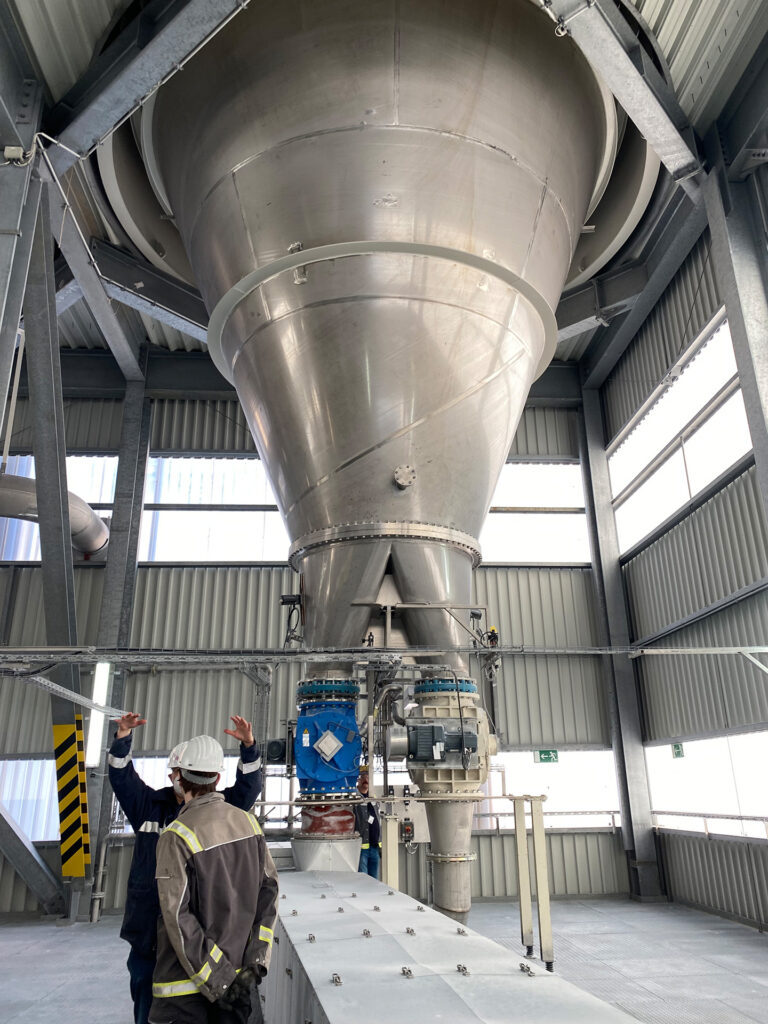
Technical Definition and Function
They are used to:
- Store large quantities of bulk solids efficiently
- Provide material flow on a continuous or discontinuous basis
- Stabilize production or logistics processes
Unlike storage tanks or pressure vessels, the focus is on:
- Solids rather than liquids or gases
- Flow behavior and discharge
- Mechanical loads caused by bulk solids

Typical Applications
Silos are used for:
- Powders
- Granules
- Pellets
- Other free-flowing solids
The specific design depends on:
- Flow characteristics of the material (e.g. free-flowing or cohesive)
- Bulk density and resulting loads
- Discharge behavior
- Ambient conditions
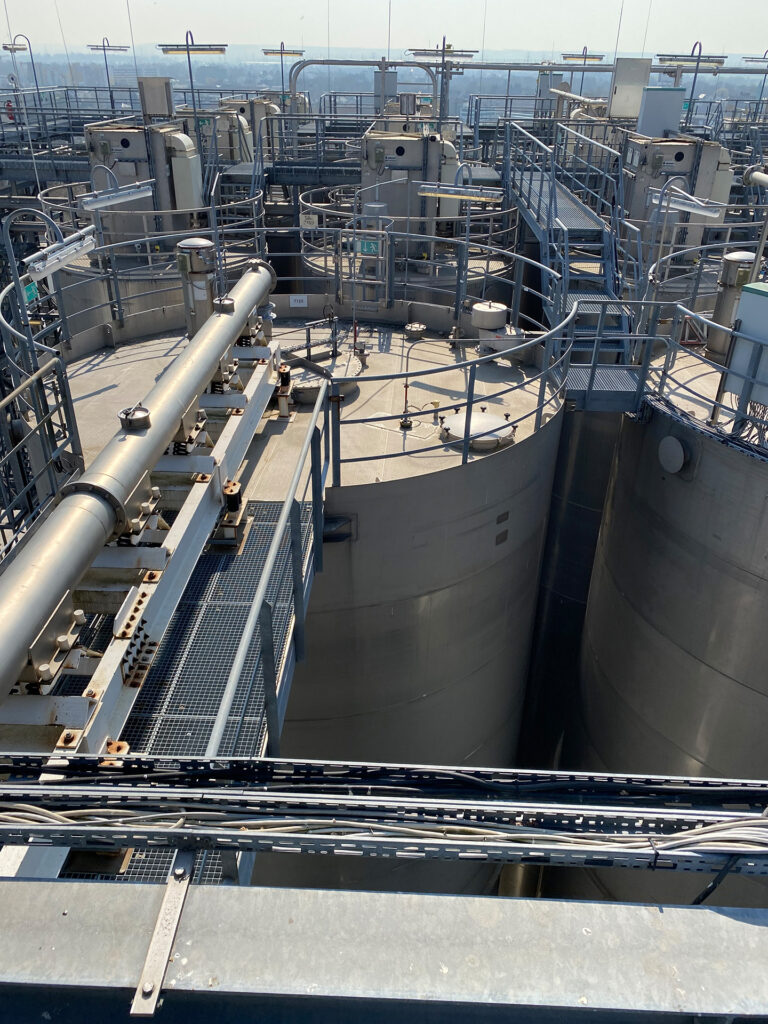
Technical Design & Options
Materials
- Stainless steel (various grades depending on the medium and environment)
Operating parameters
- Designed for static loads caused by bulk solids
- Consideration of pressure during filling and discharge
- Designed for temperature and environmental influences
- Optional design for hazardous areas
Equipment options
- Discharge systems (e.g. mechanical or pneumatic solutions)
- Level measurement and instrumentation
- Ventilation and deaeration systems
- Filter and dedusting systems
- Vibration or discharge aids to improve material flow
- Inspection openings and maintenance systems
Codes & Standards (selection, depending on application)
- Eurocode 3 (steel construction and silo design)
- ATEX (for explosive dust atmospheres)
Further standards are considered on a project-specific basis.

Sizes, Designs and Fabrication
Silos are individually engineered and adapted to the requirements of the bulk material as well as the installation conditions.
Typical features:
- Designed for large storage capacities on an industrial scale
- Construction based on structural requirements and material properties
- Single-piece fabrication possible up to approx. Ø 7.5 m
- Segmented design and on-site assembly for larger silos
Fabrication takes place under controlled conditions with documented quality assurance.
Differentiation from Other Vessel Types
Storage tank: static storage of media
Process tank: execution of mixing, reaction, or temperature-controlled processes
Pressure vessel: operation under elevated pressure or vacuum
Silo: storage and discharge of bulk solids
Special vessel: specific requirements beyond standardized applications
Technical Advantages and Added Value
- Safe storage of large quantities of bulk solids – designed for static loads and material behavior
- Reliable discharge – integrated systems to prevent bridging and flow disturbances
- Adaptation to material properties – design based on bulk density and flow characteristics
- Scalable designs – large volumes and flexible geometries are possible
- Integration into logistics and process chains – coordinated interfaces to conveying and dosing systems
Applications Across Industries
Silos are used in a wide range of industries, each with specific requirements for design, engineering, and operation.
Select your industry to learn more about the relevant requirements:
- Food industry
- Pharmaceutical industry
- Chemical industry
- Petrochemical industry
- Bulk handling