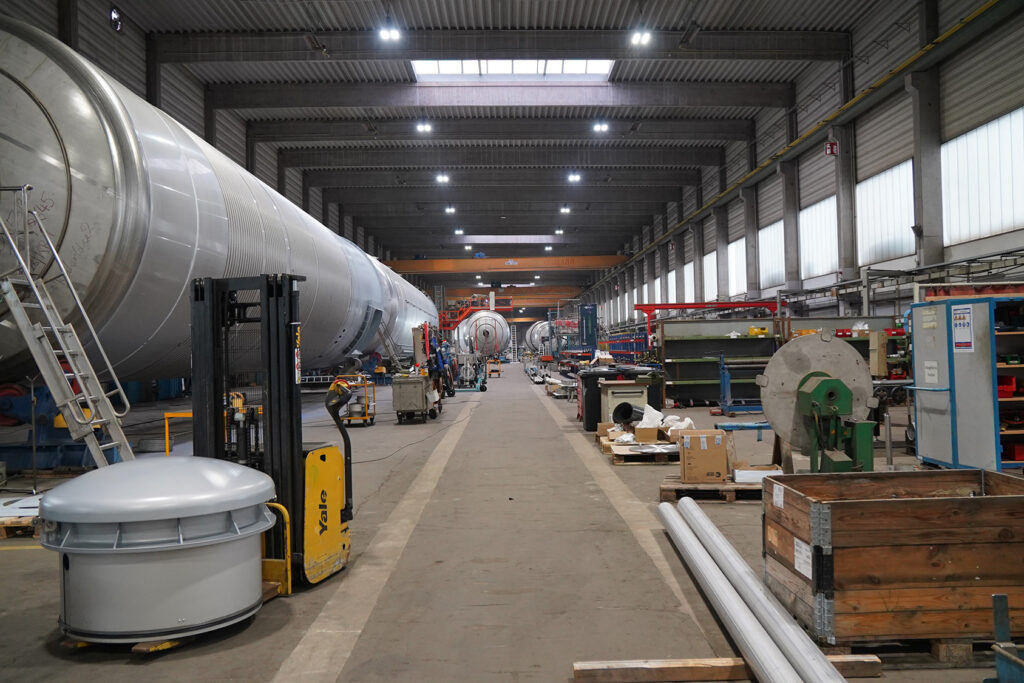
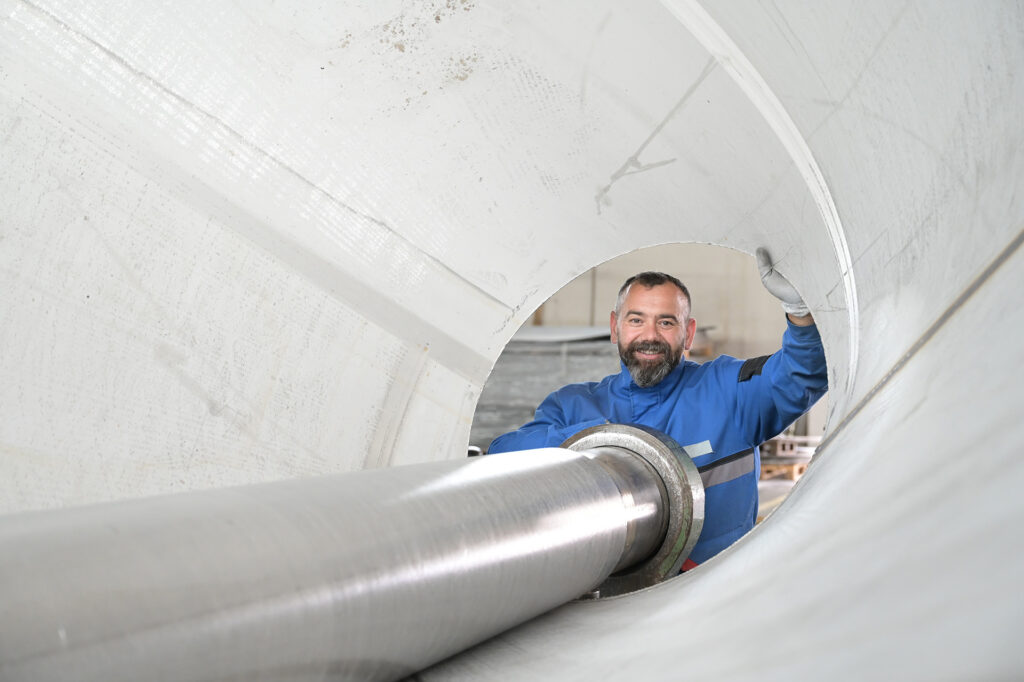
Storage tanks are stationary vessels designed for the safe storage of liquids, intermediates, or media under controlled operating conditions. They are engineered for long-term process stability, product protection, and operational safety.
Typical design parameters:
- Volume: from a few cubic meters to large-scale industrial tanks
- Configuration: cylindrical, vertical or horizontal
- Operation: atmospheric or with slight overpressure/vacuum
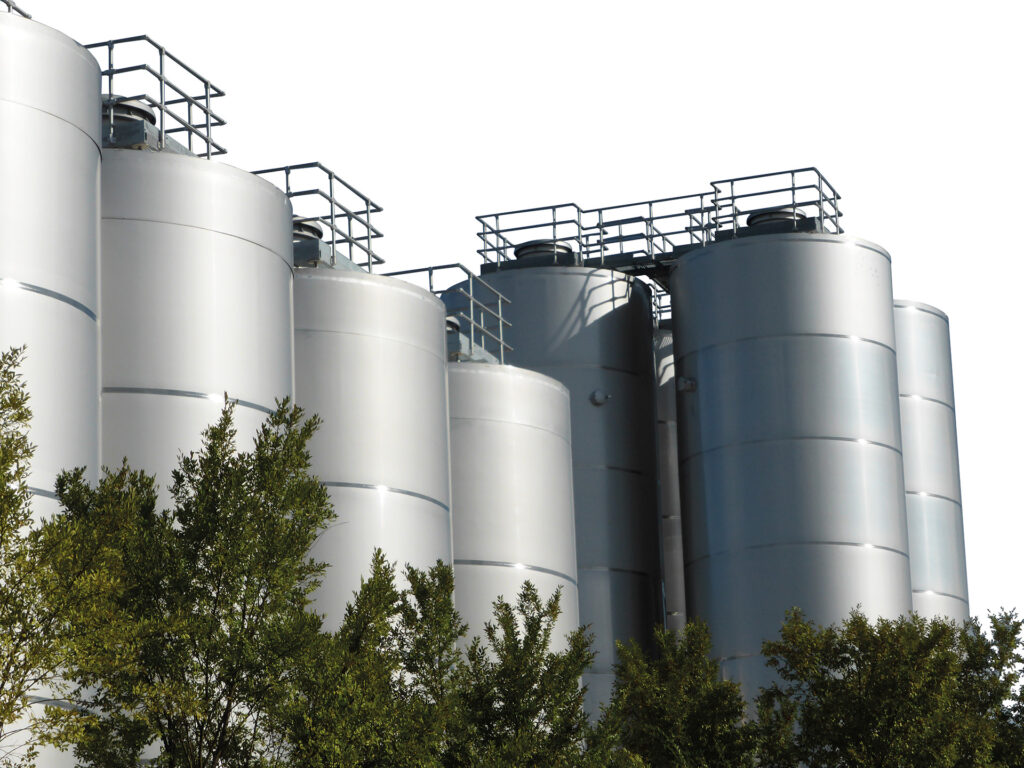
Technical Definition and Function
They are used to:
- Hold raw materials, intermediates, or finished products
- Decouple production processes over time
- Ensure consistent material flows
Unlike process tanks, the focus is not on reaction or treatment of the medium, but on its safe, quality-preserving storage.

Typical Applications
Storage tanks are used for the storage of:
- Liquids (e.g. water-based or organic media)
- Viscous substances
- Temperature-controlled media
- Sensitive or reactive substances
- Process and utility media
The specific design depends on:
- Physical properties of the medium
- Temperature requirements
- Pressure conditions
- Material compatibility
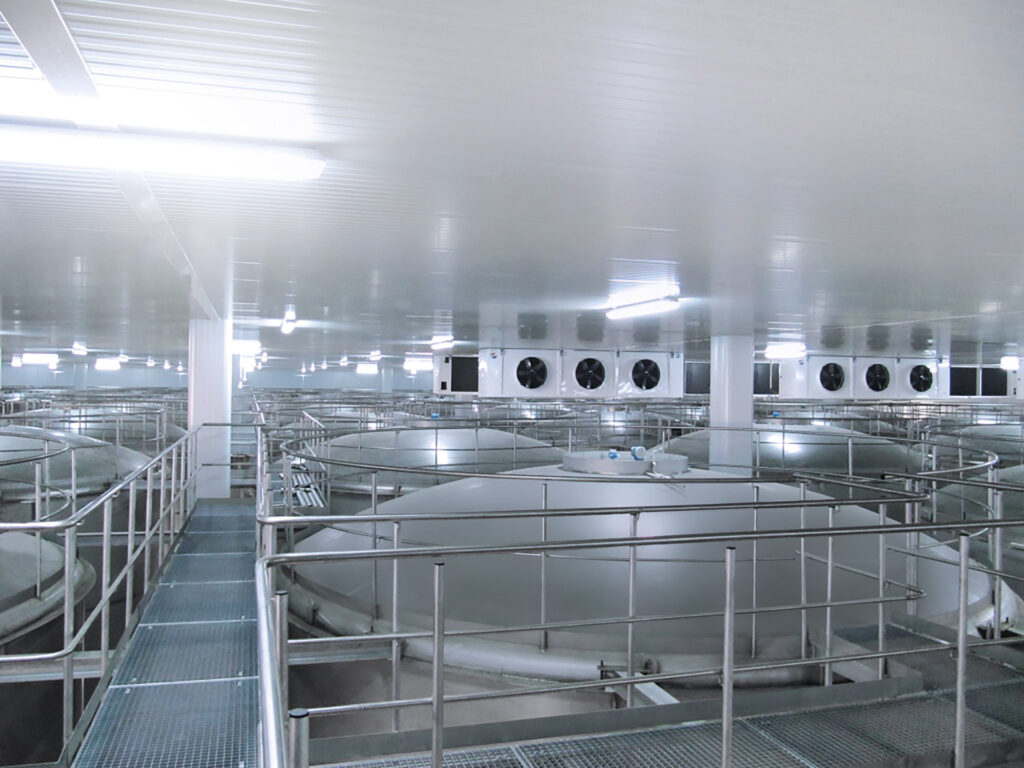
Technical Design & Options
Materials
- Stainless steel (various grades, e.g. austenitic steels)
Operating parameters
- Pressure: atmospheric up to slight overpressure/vacuum
- Temperature: depending on process requirements
- Design with regard to corrosion, abrasion, or chemical resistance
Equipment options
- Insulation (thermal or energy-related)
- Heating and cooling systems
- Level measurement and instrumentation
- Connections for cleaning systems
- Manways and inspection openings
- Ventilation and deaeration systems
Codes & Standards (selection, depending on application)
- PED (Pressure Equipment Directive)
- ASME
- API (e.g. API 650/620)
- ATEX (for potentially explosive media)
These standards are considered and defined according to the design and specific application.
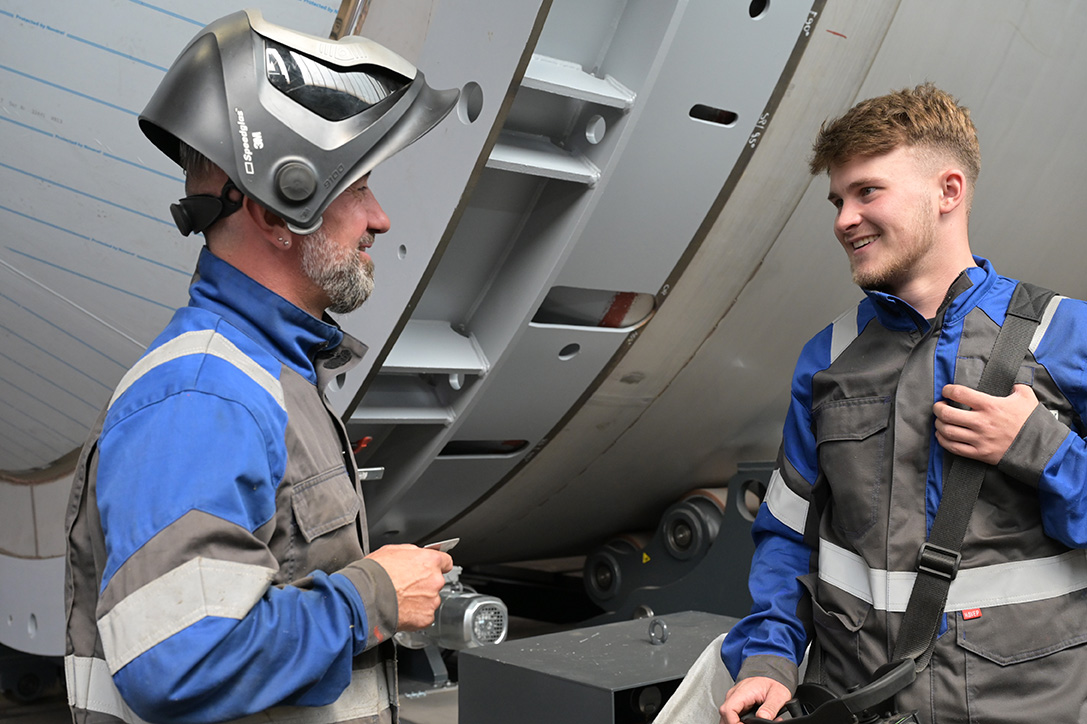
Sizes, Designs and Fabrication
Storage tanks are engineered and manufactured on a project-specific basis.
Typical features:
- Single-piece fabrication possible in the workshop up to approx. Ø 7.5m
- Beyond that: segmented design with on-site assembly
- Flexible tank geometries depending on installation and transport conditions
- Designed for large volumes on an industrial scale
Fabrication takes place under controlled conditions with documented quality assurance.
Differentiation from Other Vessel Types
Storage tank: static storage of media
Process tank: execution of mixing, reaction, or temperature-controlled processes
Pressure vessel: operation under elevated pressure or vacuum
Silo: storage of bulk solids
Special vessel: specific requirements beyond standardized applications
Technical Advantages and Added Value
- High operational safety – adaptation to existing infrastructure and plant layouts
- Large volumes can be realized – economical storage and scalability
- Reduced installation effort – single-piece fabrication, where possible, shortens installation times
- Long-term durability – suitable material selection for demanding media
Applications Across Industries
Storage tanks are used in a wide range of industries, each with specific requirements regarding design, materials, and standards.
Select your industry to learn more about the relevant requirements:
- Food industry
- Pharmaceutical industry
- Chemical industry
- Petrochemical industry
- Bulk solids logistics