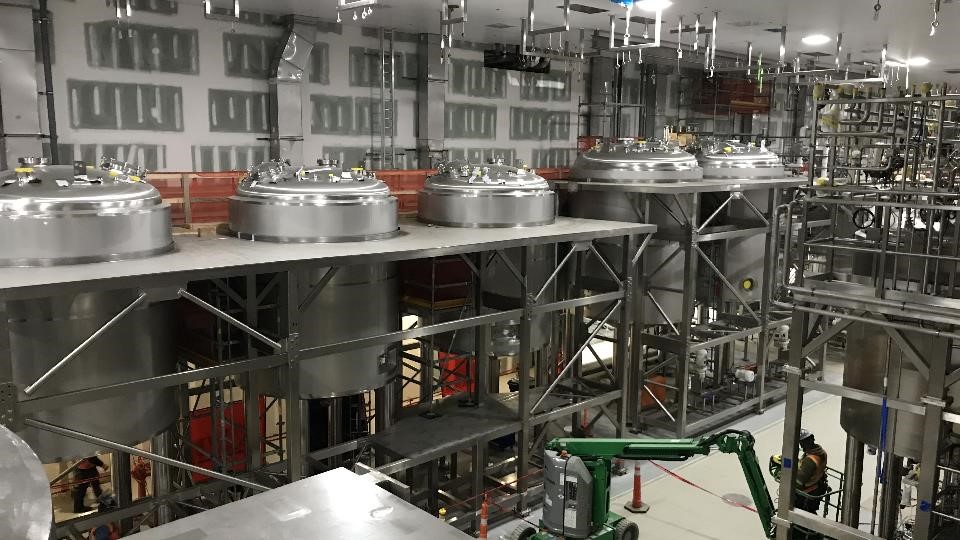
Special vessels are individually developed vessels designed for specific requirements that cannot be covered by standardized designs. They arise from special process conditions, media requirements, or structural boundary conditions.
Typical design parameters:
- Project-specific geometry and construction
- Combination of multiple functions within one vessel
- Customized materials and equipment
Technical Definition and Function
They are used to:
- Standard vessels (e.g. storage tanks, process tanks, pressure vessels) are not sufficient
- Multiple functions need to be combined in one system
- Special requirements exist regarding the medium, process, or installation situation
In contrast to standardized vessels, the focus is not on a clearly defined application, but on the individual technical solution for a specific task.

Typical Applications
Special vessels are used for:
- Media with special physical or chemical properties
- Applications with complex process requirements
- Combinations of storage, process, or pressure functions
- Plants with special structural or spatial conditions
- Systems with higher requirements for integration and interfaces
The specific design depends on:
- Process requirements
- Medium
- Operating conditions
- Space constraints and integration
Technical Design & Options
Materials
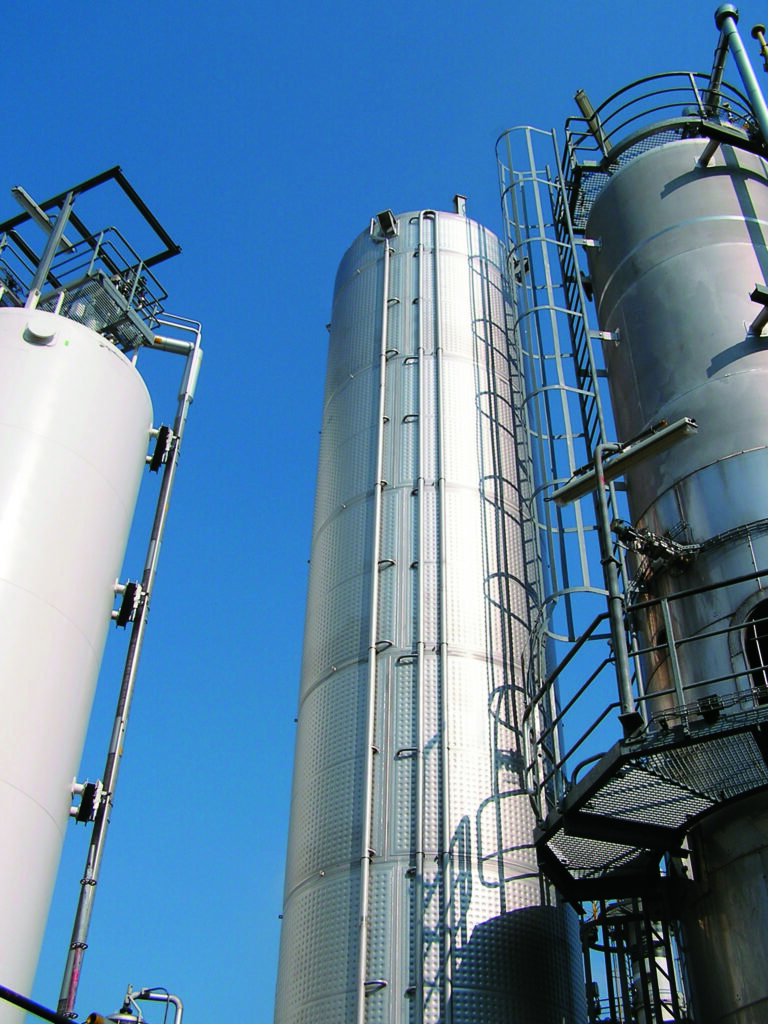
- Stainless steel in various alloys
Operating parameters
- Designed for pressure, temperature, or combinations of both
- Consideration of complex load cases
- Designed for corrosion, abrasion, or special media requirements
- Integration of mechanical and thermal functions
Equipment options
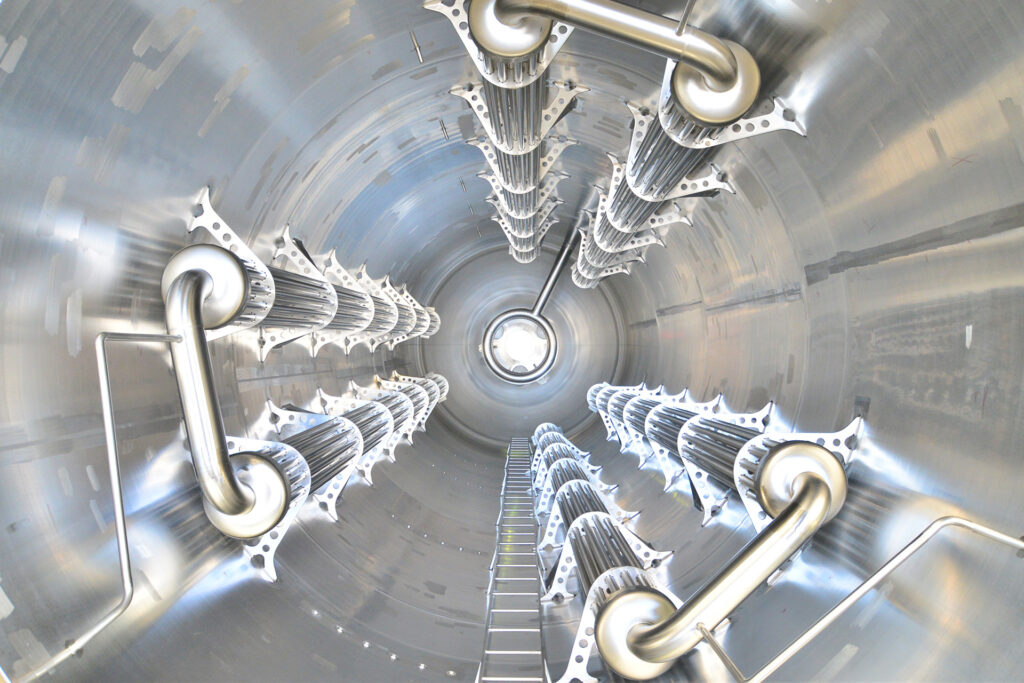
- Combination of different system components within one vessel
- Integration of agitators, heat exchangers, or internals
- Insulation and thermal systems
- Instrumentation and control technology
- Complex connection and interface solutions
- Special geometries and custom designs
Codes & Standards (selection, depending on application)
- PED
- ASME
- API
- ATEX
- Project-specific codes and customer requirements
The applicable standards are selected based on the process and operating conditions.
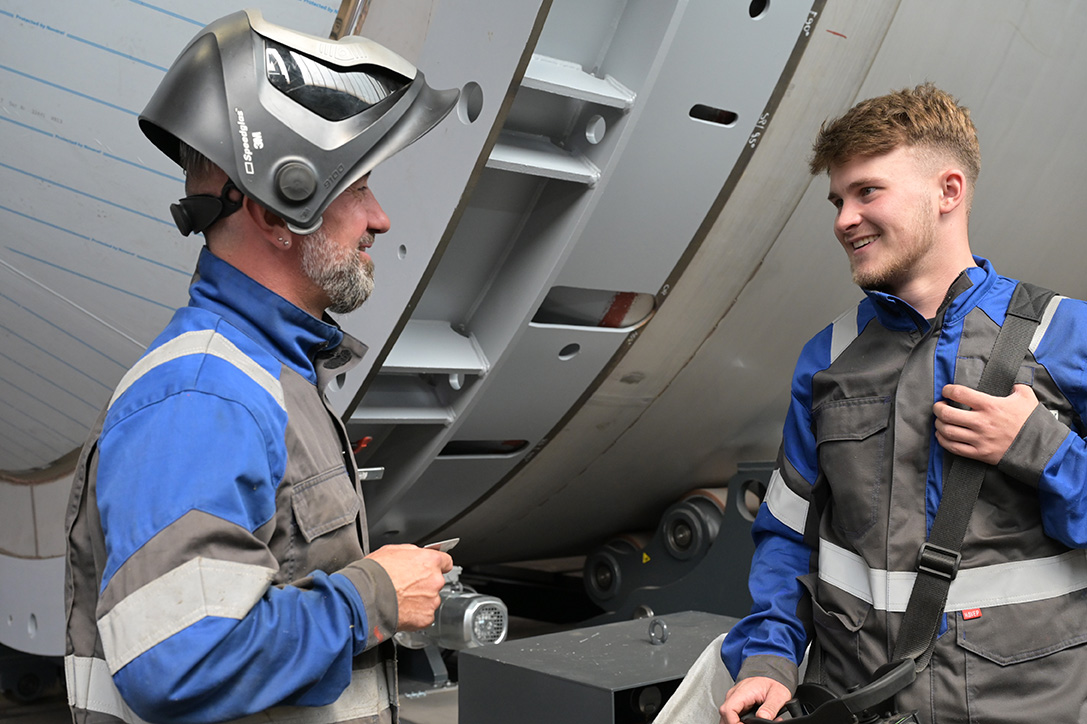
Sizes, Designs and Fabrication
Special vessels are fully engineered and manufactured on a project-specific basis.
Typical features:
- Adaptation of geometry to specific requirements
- Combination of different construction methods within one system
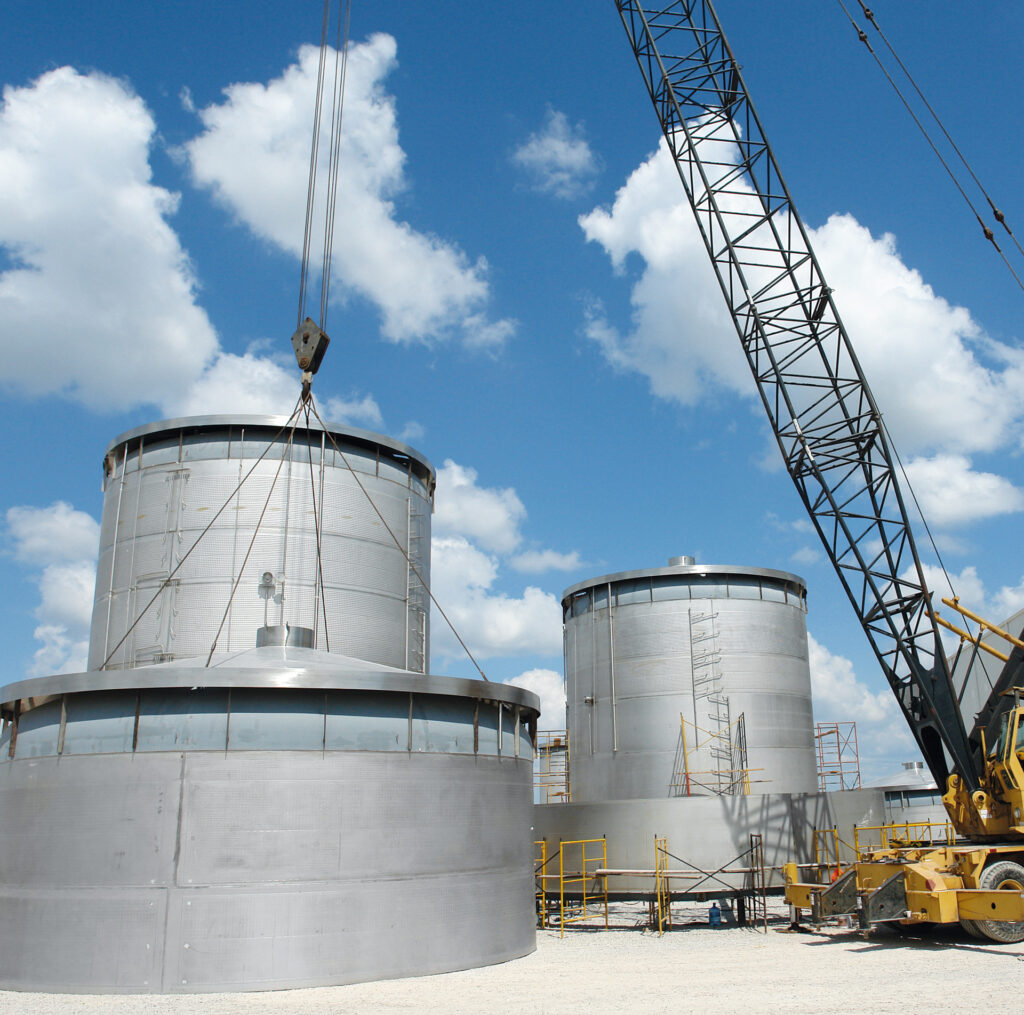
- Single-piece fabrication possible up to approx. Ø 7.5 m, depending on geometry and transport conditions
- Segmented design and on-site assembly for complex or large-volume designs
Fabrication takes place with consideration of project-specific requirements and documented quality assurance.
Differentiation from Other Vessel Types
Storage tank: static storage of media
Process tank: execution of mixing, reaction, or temperature-controlled processes
Pressure vessel: operation under elevated pressure or vacuum
Silo: storage of bulk solids
Special vessel: individual solution for specific requirements
Technical Advantages and Added Value
- Individual solution for complex requirements – adaptation to specific process and plant conditions
- Integration of multiple functions – reduction of interfaces and system complexity
- Flexibility in design – geometry, equipment, and materials can be adapted freely
- Optimized plant integration – aligned with existing infrastructure and processes
- Design according to specific standards and requirements – consideration of project-specific requirements
- Long-term durability – suitable material selection for demanding media
Applications Across Industries
Special vessels are used in a wide range of industries, especially where standard solutions do not fully meet the requirements.
Select your industry to learn more about the relevant requirements:
- Food industry
- Pharmaceutical industry
- Chemical industry
- Petrochemical industry
- Bulk handling