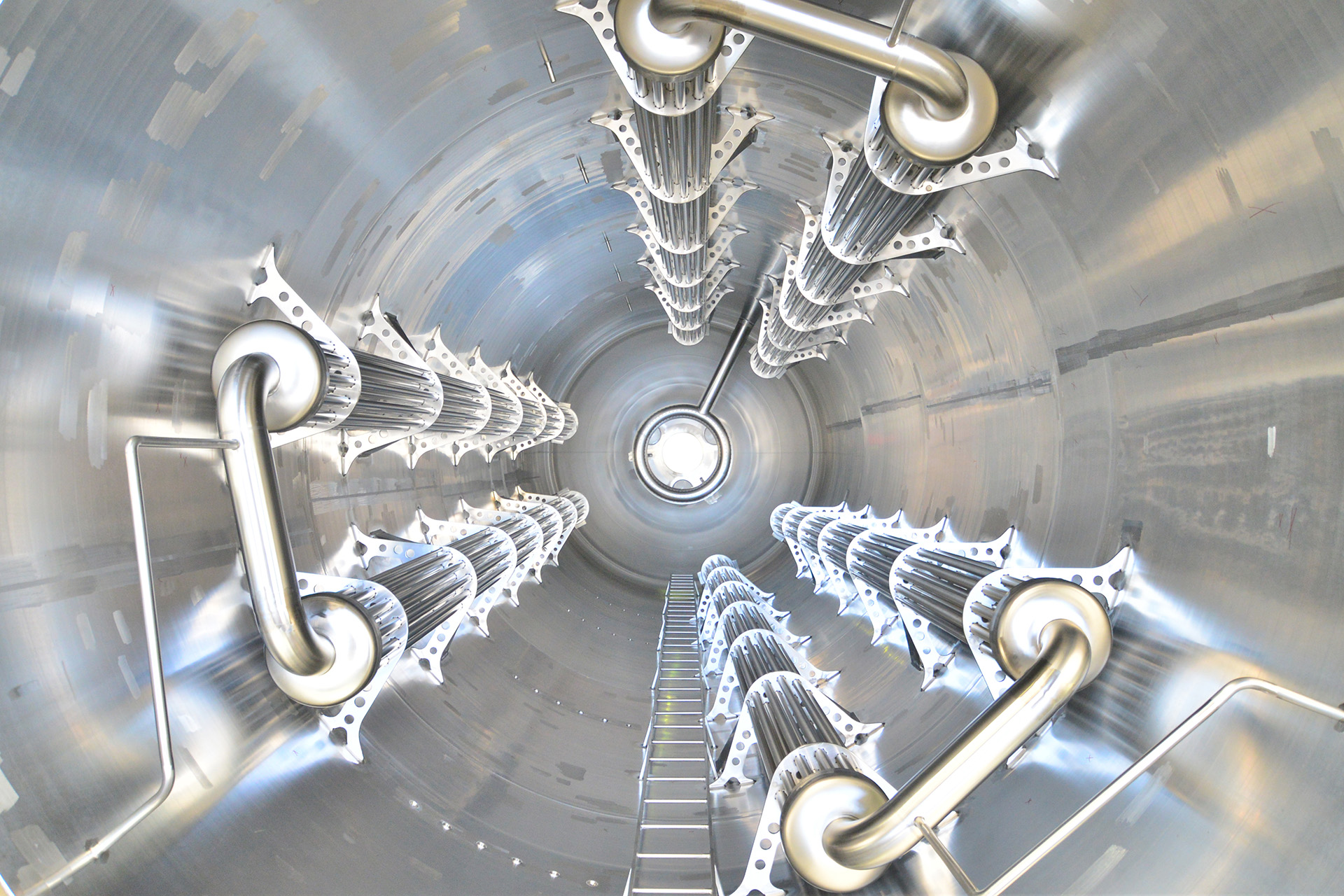
Process tanks are vessels designed for the targeted execution of mechanical, thermal, or chemical processes. Unlike pure storage, they enable the active treatment of media under defined operating conditions.
Typical design parameters:
- Integration of agitators, heat exchangers, and instrumentation
- Operation under controlled temperature conditions and, where required, pressure
- Designed for continuous or batch processes
Technical Definition and Function
They are used to:
- Mix or homogenize media
- Carry out chemical or physical reactions
- Control temperature-driven processes (heating, cooling)
- Maintain defined process conditions over a specified period of time
Unlike storage tanks, the focus is not on storage but on the targeted transformation or treatment of the medium.

Typical Applications
Process tanks are used for:
- Mixing processes involving liquids or viscous media
- Reaction processes under defined conditions
- Temperature-controlled processes
- Homogenization or mass transfer
- Continuous or batch operation
The specific design depends on:
- Viscosity and flow characteristics of the medium
- Reaction kinetics or mixing requirements
- Temperature control and heat transfer
- Required process control and instrumentation
Technical Design & Options
Materials
- Stainless steel in suitable grades depending on media requirements
- Optional special materials for specific operating conditions
Operating parameters
- Designed for defined temperature ranges
- Optional pressure or vacuum operation
- Consideration of mechanical loads caused by agitation systems
- Designed with regard to corrosion, abrasion, and cleanability
Equipment options
- Agitators (various geometries and performance ranges)
- Heating and cooling systems (e.g. jacket, heating coils)
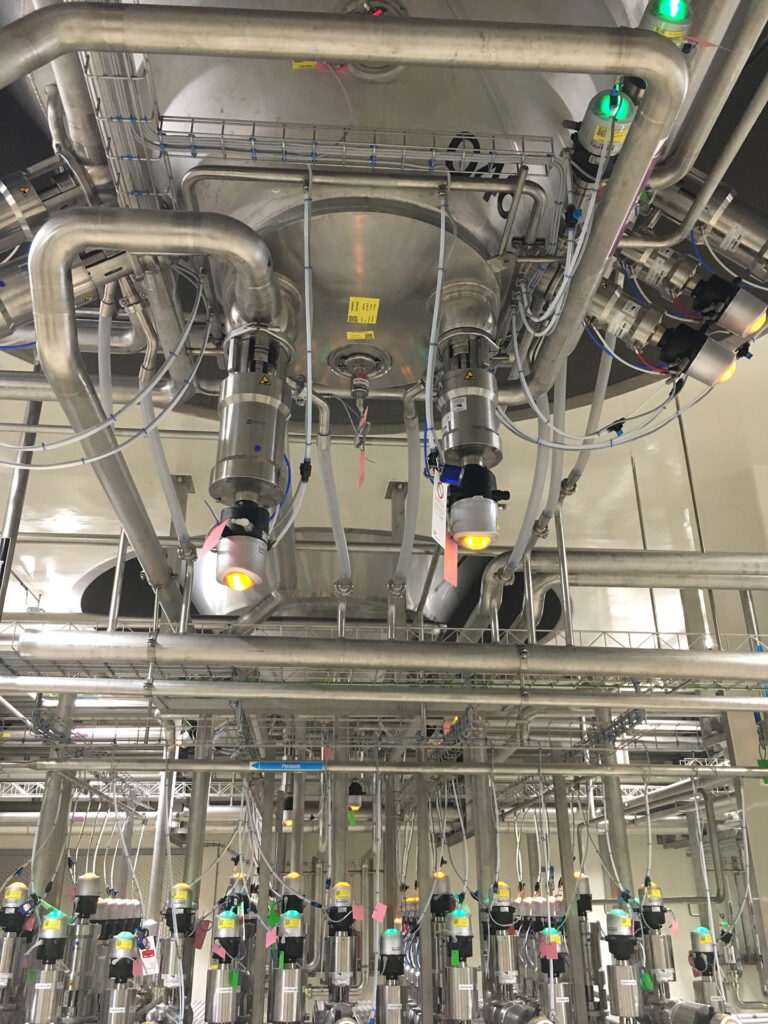
- Instrumentation (temperature, pressure, level, process parameters)
- Insulation
- Internal components for process optimization
- Connections for cleaning systems
- Automation and control interfaces
Codes & Standards (selection, depending on application)
- PED (for pressure-rated designs)
- ASME
- ATEX (for potentially explosive media)
- Additional project-specific codes and standards
The applicable standards are selected based on the process and operating conditions.

Sizes, Designs and Fabrication
Process tanks are individually engineered and manufactured depending on process requirements and plant integration.
Typical features:
- Single-piece fabrication possible in the workshop up to approx. Ø 7.5 m
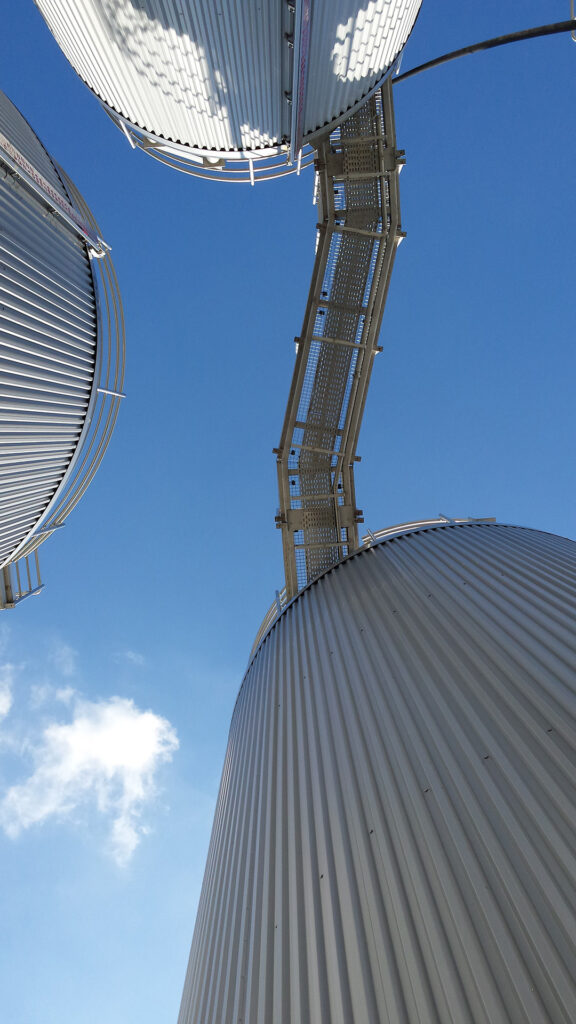
- Segmented design and on-site assembly for larger installations
- Integration of process components already during fabrication
- Consideration of loads caused by internals and operation
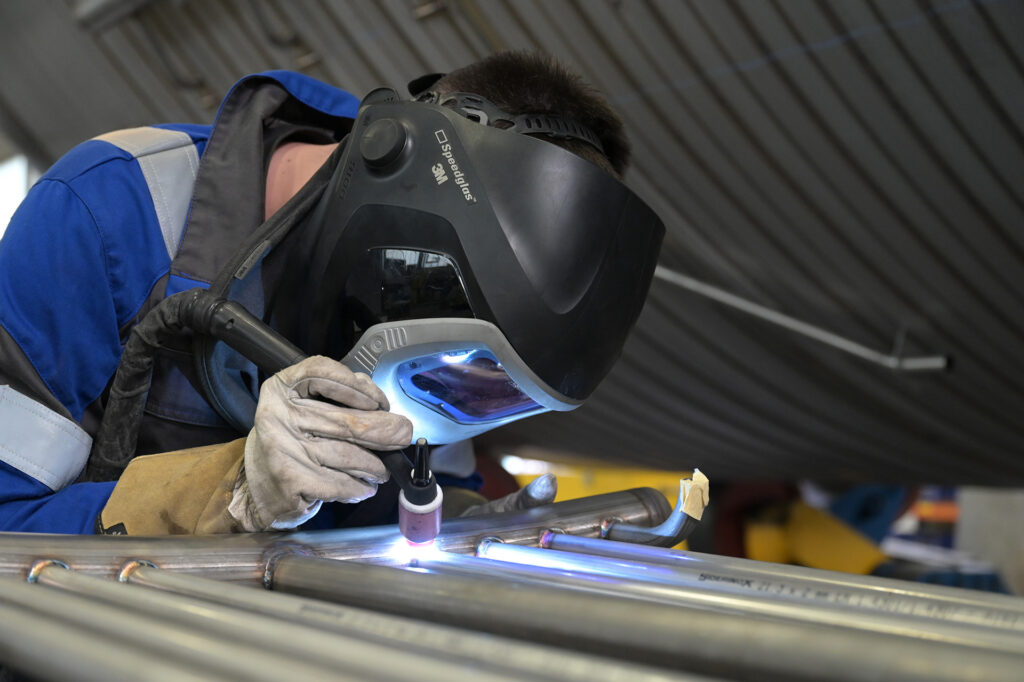
Fabrication takes place under controlled conditions with documented quality assurance.
Differentiation from Other Vessel Types
Storage tank: pure storage without a process function
Process tank: active execution of mixing, reaction, or temperature-controlled processes
Pressure vessel: operation under elevated pressure without necessarily providing a process function
Silo: storage of bulk solids
Special vessel: specific special applications
Technical Advantages and Added Value
- Targeted process control inside the vessel – integration of mechanical and thermal influences
- High flexibility in design – adaptation to different process requirements
- Integration of multiple functions – mixing, temperature control, and process monitoring in one system
- Efficient heat transfer – through suitable heating and cooling systems
- Adaptable process parameters – through the combination of agitator, instrumentation, and control
Applications Across Industries
Process tanks are used in a wide range of industries, each with specific requirements for design, standards, and process control.
Select your industry to learn more about the relevant requirements:
- Food industry
- Pharmaceutical industry
- Chemical industry
- Petrochemical industry
- Bulk handling